Behind the scenes
Digital experiences
News
Behind the scenes of The Machines of the Imaginary
By Lili Trottier
2025-11-20
Crédit photo : Dpt.
By Lili Trottier
2025-11-20
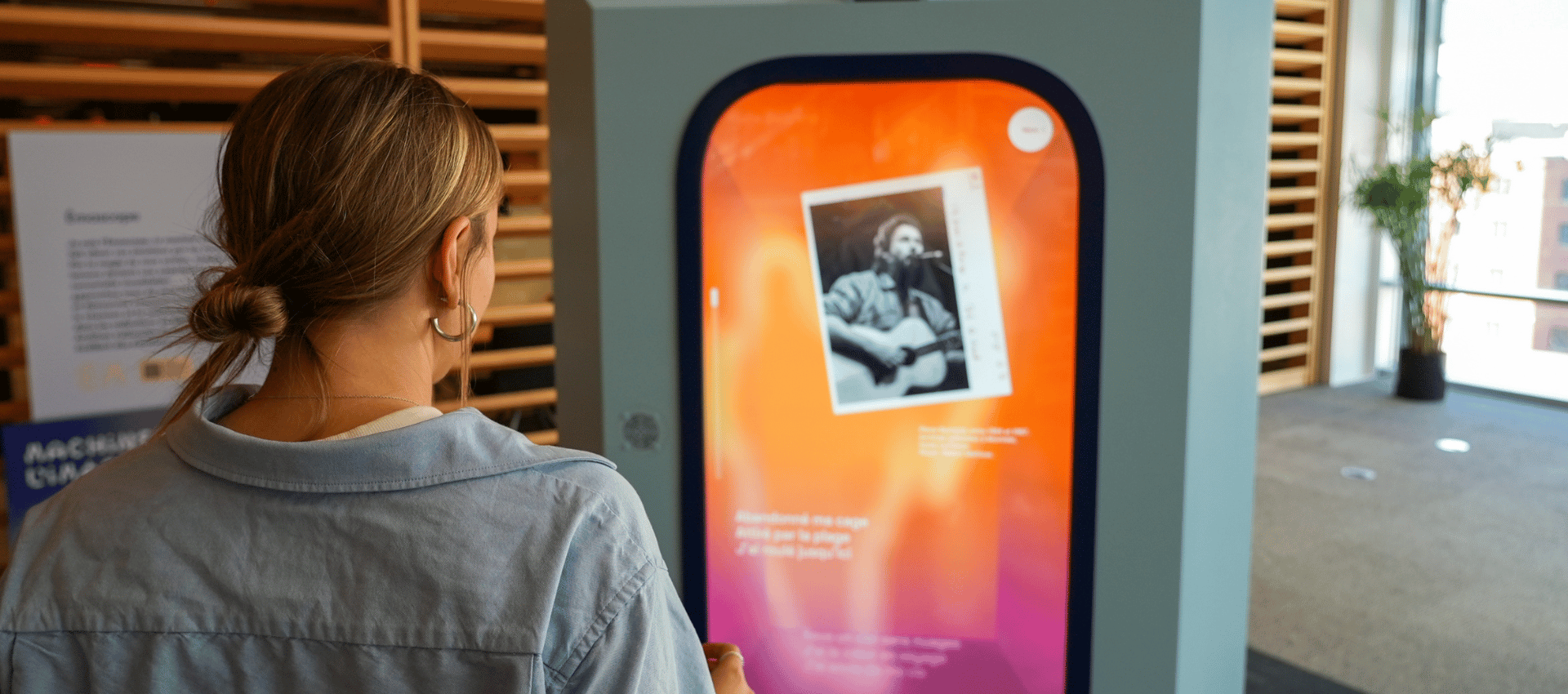
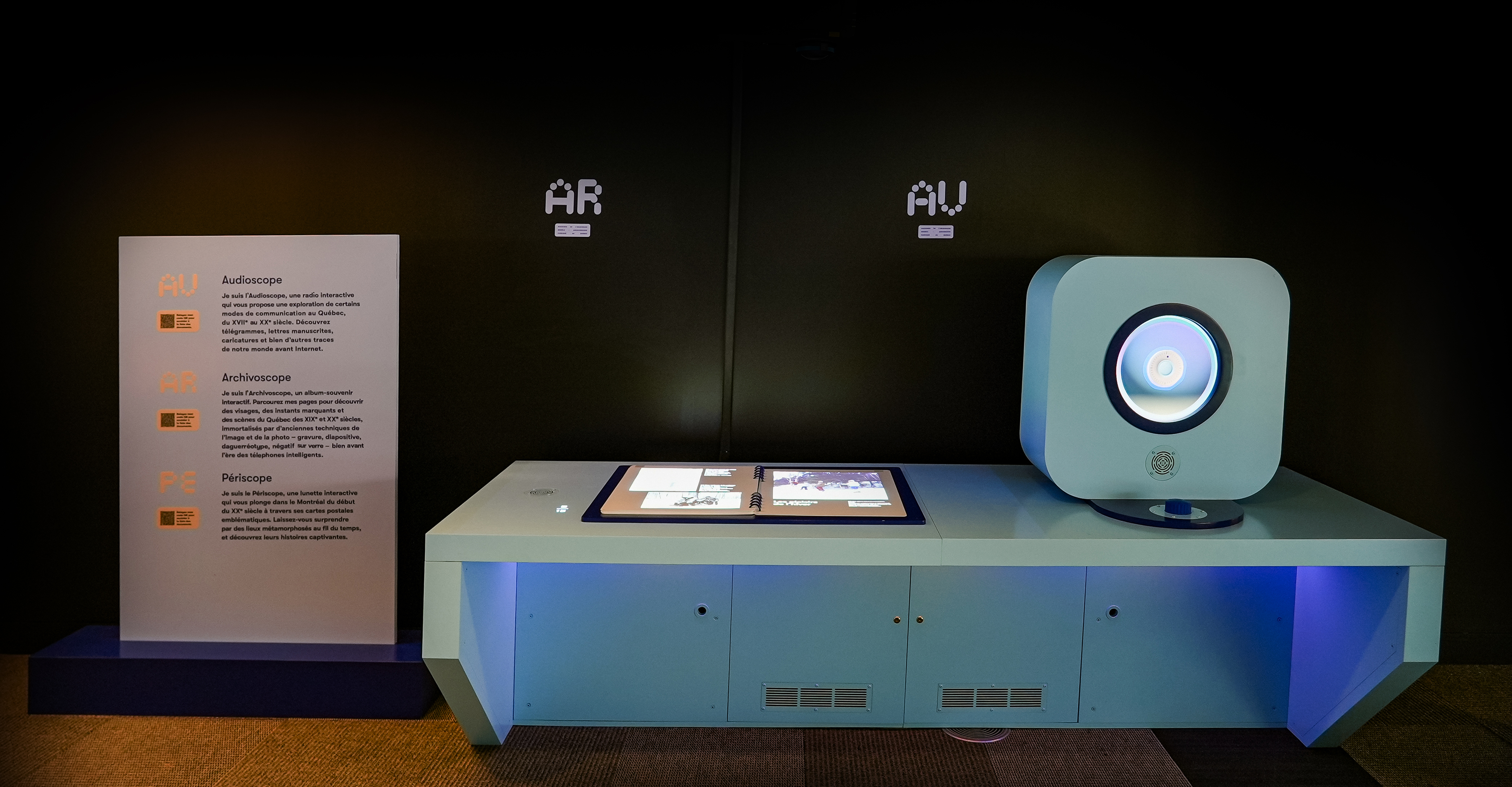
Entitled The Machines of the Imagination, this immersive exhibition by Dpt., in collaboration with Bibliothèque et Archives nationales du Québec (BAnQ) and with the participation of GSM Project, Studio Transversal, Studio Réunion, and Jack World Inc., transforms the discovery of knowledge into a sensory experience.
To uncover the mysteries behind the scenes of this project, we met with Maude Thibodeau, creative director and experience designer at Dpt.
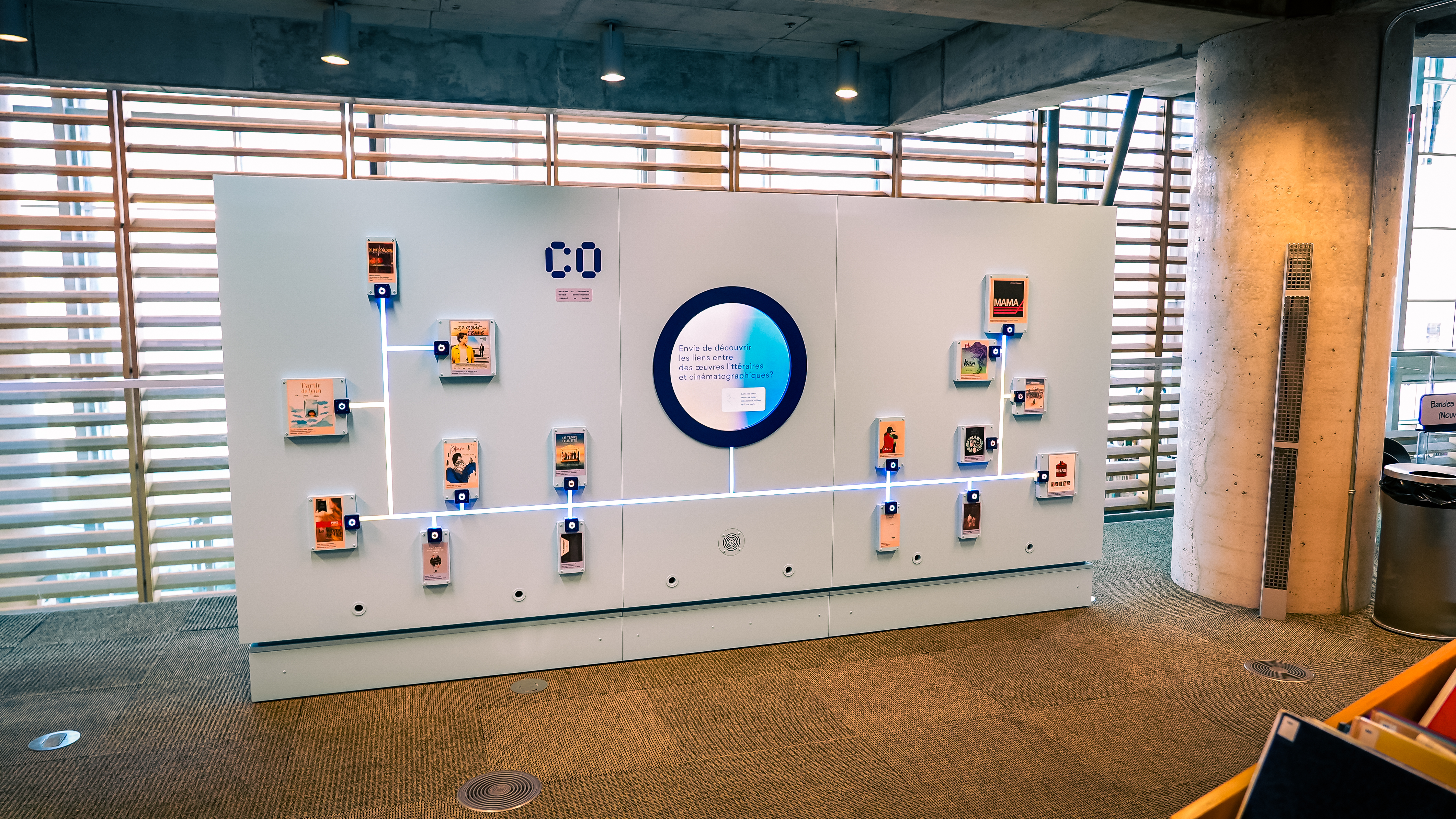
Presented at the Grande Bibliothèque for a period of 18 months, The Machines of the Imaginary is BAnQ’s first interactive experience. It offers a non-linear journey, spread over several floors, where the public can move freely among the immersive installations.
 Crédit photo : DPT.
— Maude Thibodeau, Creative Director and Experience Producer at Dpt.
Before arriving at this result, Maude Thibodeau and her team conducted extensive research: exploring collections, scouting locations, and gathering inspiration.
— Maude Thibodeau, Creative Director and Experience Producer at Dpt.
Then came the detailed design phase, where each element, including the definition of the visitor paths, interactions, and scenography, took shape until the space was finalized. The team then moved on to the production of the interactive devices, with a rigorous testing and quality control process throughout.
The final installation at the Grande Bibliothèque was completed with a period of testing and promotion.
 Crédit photo : DPT.
Designing The Machines of the Imaginary was a major challenge: we had to come up with an experience that would appeal to all audiences, from young people to adults, while fitting into the multi-story spaces of the Grande Bibliothèque. We had to find a strong enough theme, while respecting time and budget constraints.
— Maude Thibodeau, Creative Director and Experience Producer at Dpt.
Ultimately, Dpt. rose to the challenge with flying colors. It focused on designing autonomous, freestanding installations, and thanks to user detectors in the space, each machine turns on when visitors pass by, making the experience lively and intuitive.
— Maude Thibodeau, Creative Director and Experience Producer at Dpt.
For Maude Thibodeau, the key lies in curiosity and the courage to experiment:
— Maude Thibodeau, Creative Director and Experience Producer at Dpt.
The EXPERTS learning platform, powered by SYNTHÈSE, offers the course free of charge and exclusively: Screenwriting of immersive artistic experiences by expert Vincent Brault, in partnership with École NAD-UQAC (3 hours).
Here’s what you’ll learn:
Immersion and immersive arts
Immersive devices
Storytelling and digital media
Contexts, themes and objectives
Elements of the language of immersive arts
Interactivity and user experience
Production stages and organizational models
Conception, design and prototyping
For more than 15 years, she has been designing immersive and multisensory experiences at the crossroads of design, video games, museology, advertising, and cinema.
Maude Thibodeau has been working at Dpt. since 2016, where she has contributed to several major projects, including The Enemy, Plastisapiens, Basquiat and Music, and Oto's Planet.
In addition to her professional practice, she is pursuing a master's degree in communication at UQÀM, where she explores how technology shapes our relationship to the body through a posthumanist perspective.